

Lotus 49
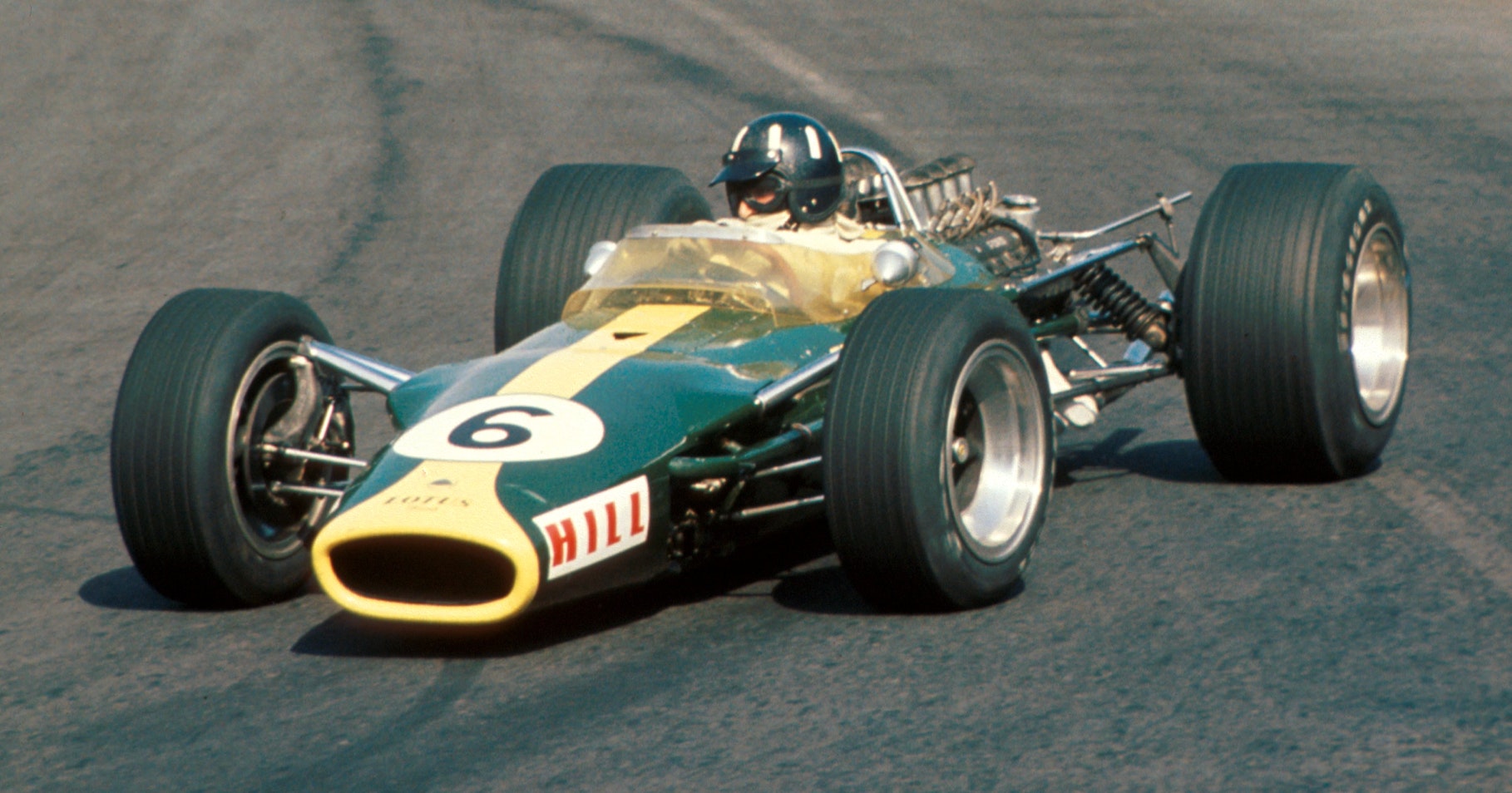
Car: Lotus-Ford 49 / Engine: 900 V8 Ford-Cosworth DFV / Maker: Lotus / Bore X Stroke: 85.7 x 64.8 mm / Year: 1967 / Capacity: 2,998 cc / Class: Formula 1 / Power: 415 bhp at 9,500 rpm / Wheelbase: 2,413 mm Track: Front: 60 inches Rear: 61 inches / Weight: 1168.4 lbs
This is easily one of our favorite Lotus race cars ever. The 3 liter Formula was now one year old and after an unsuccessful 1966 season using a variety of engines including the H-16 BRM, Chapman was desperate for a new power source. He approached Keith Duckworth who along with Mike Costin and Bill Brown had built a lucrative business modifying production-based Ford engines for the junior formula.
Could he build a proper Grand Prix engine and how much money was needed. Duckworth estimated that it would take £100,000 to design, build and maintain five engines for one season. All that was needed was a source for this money. Ford of Europe, recently established, was looking to make a name for itself. Walter Hayes, Ford’s director of public affairs knew both men well and was able to sell the plan to his superiors back in Detroit.

A V-8 configuration was selected and initial opinion questioned whether Ford was out of its league. Most observers felt that a 12 cylinder engine would be bare minimum required for the 3 liter Formula and BRM continued with their 16 but the 8 cylinder had many adherents back in Detroit. Colin Chapman was also in favor of a V8 which could be made smaller and lighter. Like the previous year’s Type 43 the new car would have a monocoque chassis where the engine served as a stressed member. Designed by Maurice Phillippe to work hand in hand with the new engine the Lotus 49 was kept as simple as possible. The main connection between the engine and the chassis was via two bolts spaced 9 inches apart at the bottom of the monocoque with additional connections at the reinforced cam covers.

For 1967, Graham Hill was added to the team at the instigation of Ford. Starting out at Lotus he had left the firm in 1960 to join BRM a fact that was never totally forgiven by Chapman. Early testing of the new car was entrusted to Hill as Jimmy Clark had become a temporary “tax exile” during this period. The additional power was at first obvious and Hill would later talk of a wooden board placed behind the driver to compensate for the increased acceleration. This sudden surge of power came at 6,500 rpm and took some getting used too. Until the throttle linkage was upgraded the car had a distinct feeling of an on and off switch. Clark would complain that it was easier to get the maximum out of the Lotus 25 or 33 than the 49. This may well have been the musings of a driver contemplating the end of his career which he would not live to see. The difference in Formula’s was more than just a matter of engine power. Rather than finesse it was more a matter of the driver putting his foot down on the accelerator sooner and longer. Clark always an artist in a car may have seen his advantage disappearing.
 The new engine was finally ready for the third race of the season, the Dutch Grand Prix at Zandvoort. Graham Hill started from pole position while Clark suffering from teething problems during qualifying was stuck in the eighth position. Hill led from the start but was forced to retire on the eleventh lap due to a broken camshaft. Clark was able to make his way to the front where he scored Ford’s first victory in its debut race. Clark’s engine was stripped down after the race and it was found that its timing gear was damaged. With these the only two engines in existence much work was required to get the cars ready for the next race. The most important race of the year was the U.S. Grand Prix at Watkins Glen for obvious reasons. In front of all the Ford brass it was decided that the drivers would compete under team orders with Hill winning the coin toss. In the race Clark took the early lead but soon let his teammate pass. On lap 40 Hill’s car began to slow with clutch problems. Clark dutifully slowed also but under the threat of Amon’s Ferrari was told by Chapman to assume the lead. The unlucky Amon was forced to retire 13 laps from the finish and the Lotus cars were again 1-2. Clark again slowed in order for Hill to catch up but with the race almost over the sight of the leading car traveling so slowly would have been too much of an affront to the other competitors (did somebody say Ferrari?) so Clark won the race that was to have been Hill’s. Clark showing his class immediately went to Hill after the race to apologize but any dispute between these two great champions was short lived and Ford had their 1-2.

History was written that day and for the next fifteen years Cosworth and Ford were synonymous with winning. Their contract with Lotus only stipulated exclusivity for that first year and though the Lotus-Fords would continue to dominate qualifying, scoring 11 straight pole positions, various mechanical trouble not all related to the engine would cost them the championship. Clark would out qualify the second place Hulme by almost 10 seconds at the Nurburgring only to drop out after 3 laps due to suspension failure.
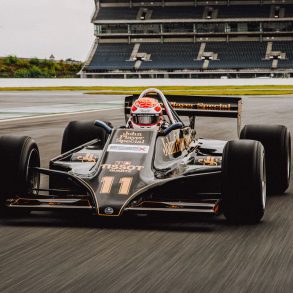
The Lotus-Ford 49 would continue to serve Lotus for the next three years. Evolving from the classic British Green racer sans wings to the red, white and gold moving cigarette pack with tall and then low wings. The car would power Graham Hill to the 1968 World Championship after the tragic death of Clark in a meaningless Formula 2 race. In 1970 Jochen Rindt scored a legendary victory over retiring three-time World Champion Jack Brabham at Monaco. The Ford Cosworth DFV or double-four-valves would eventually become the engine of choice for all of the British teams leading to the growth of Formula 1 in the years to come. The impact of Ford’s decision to make the engine available to any manufacturer cannot be underestimated and is directly responsible for the domination of the British teams in chassis design now that they were more or less free of any responsibility for the engine.